July 15, 2018
History

Over 1,000 years old, Dublin has the feel of a small city that, at first glance, appears to cling to its past. From the stone façade of Trinity College to the magnificent medieval St. Patrick’s Cathedral, you may think that Dublin is deeply rooted in its history. But, it is far more than a trip down memory lane. This cozy city is confident, energetic, and cosmopolitan.
Medieval heritage:
The Celts migrated here about 350 B.C. and quickly conquered the inhabitants only to be ousted themselves by the Vikings in 795 A.D. who established the walled town called Dubh Linn in 841. The Norman era began in 1169 when Henry II conquered Ireland. Dublin remained a medieval city until the reign of the four King Georges beginning in 1714.
Dublin’s imposing castles and estates:
Built on the site of the first Viking fortress in the 10th century, Dublin Castle has been a symbol of British rule for 700 years. After the Norman invasion, the Castle was built in 1204 to defend the city, and later used as a royal residence. Rebuilt and remodeled over the last 300 years, today the grounds span an area of over eleven acres and houses two museums, two gardens and the prestigious State Apartments.
Malahide Castle is one of Ireland’s oldest and most historic castles. Once under the rule of Hammund MacTurkill, Dublin’s last Viking king, the costal town of Malahide fell to Norman conquest and was awarded to one of King Henry’s favorite knights, Richard Talbot. Construction of the Castle began in 1185 and for the following 790 years the Talbot family was its sole owners.
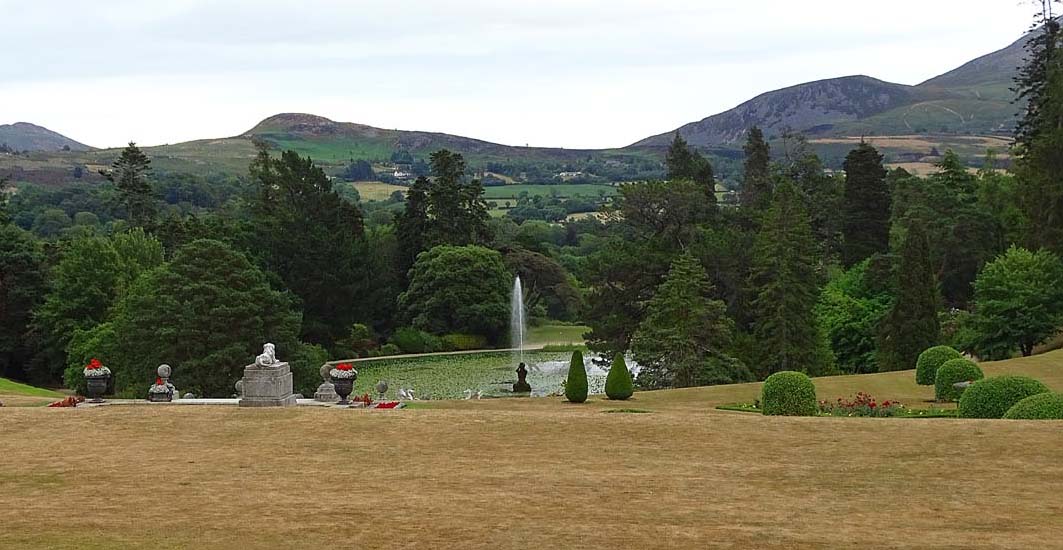
Powerscourt Estate and Gardens was another important strategic site for the Normans. Originally constructed in 1300, the estate was remodeled in the 18th and 19th centuries. Set against the breathtaking Wicklow Hills, its beauty is only matched by its extravagant 270-year-old gardens and Powerscourt Waterfall. Formed over 10,000 years ago, the waterfall is Ireland’s highest at 398 feet.
City treasures:
Founded in 1592 by Queen Elizabeth I, Trinity College is Ireland’s oldest college. Its extensive library holds five million printed volumes with extensive collections of journals, manuscripts, maps and music. The highlight of any tour is a vistit to the Library’s Long Room to see the Book of Kells. A masterpiece of medieval art, the lavishly illustrated manuscript dates to the early 9th century.
Built in honor of Ireland’s patron saint, St. Patrick’s Cathedral stands adjacent to the famous well where tradition says he baptized converts. Believed to be the earliest Christian site in Ireland, a wooden church once stood on this site from the 5th century to about 1191. St. Patrick’s was erected between 1200 and 1270 but through the centuries the elements, religious reformation, and persecution took their toll and the Cathedral fell into disrepair. Between 1860 and 1900, a full-scale restoration was carried out by the Guinness family and much of what we see today dates from the Victorian era.

Literature and libations:
With a literary heritage stretching over hundreds of years Dublin has been designated a UNESCO City of Literature. And with over 1,000 pubs which have been at the center of Dublin’s social life for generations.
If you’d like to learn the secrets of one of the world’s most famous beers, visit the Guinness Storehouse where they showcase the fascinating process of how Dublin’s prized pint is created.
Dublin isn’t just a misty moor or hillsides covered in four-leaf clovers, it’s a bustling, thriving city full of history, world-class restaurants, modern museums and galleries waiting to be discovered.
Our tour of Dublin

Obviously, we cannot take in all of the above historic and ancient sites, but we did take an all day bus tour through and around Dublin. It is always a hard decision as to which tour we would enjoy the most, because all the tours happen at the same time… Ah, so little time!


Up early – no time for coffee or tea before we board a ‘motor coach’ tour of Dublin at 6:40AM! It is a Sunday morning and surprisingly all the Dubliner’s are ‘sleeping it off’ from their Saturday night at the pub watching some soccer match, so the streets are deserted, which meant our charter bus could stop almost anywhere for us to take pictures without hampering traffic. Alas, now we are in true Ireland as it begins to drizzle and tourist raincoats and umbrellas appear (but it would soon stop).


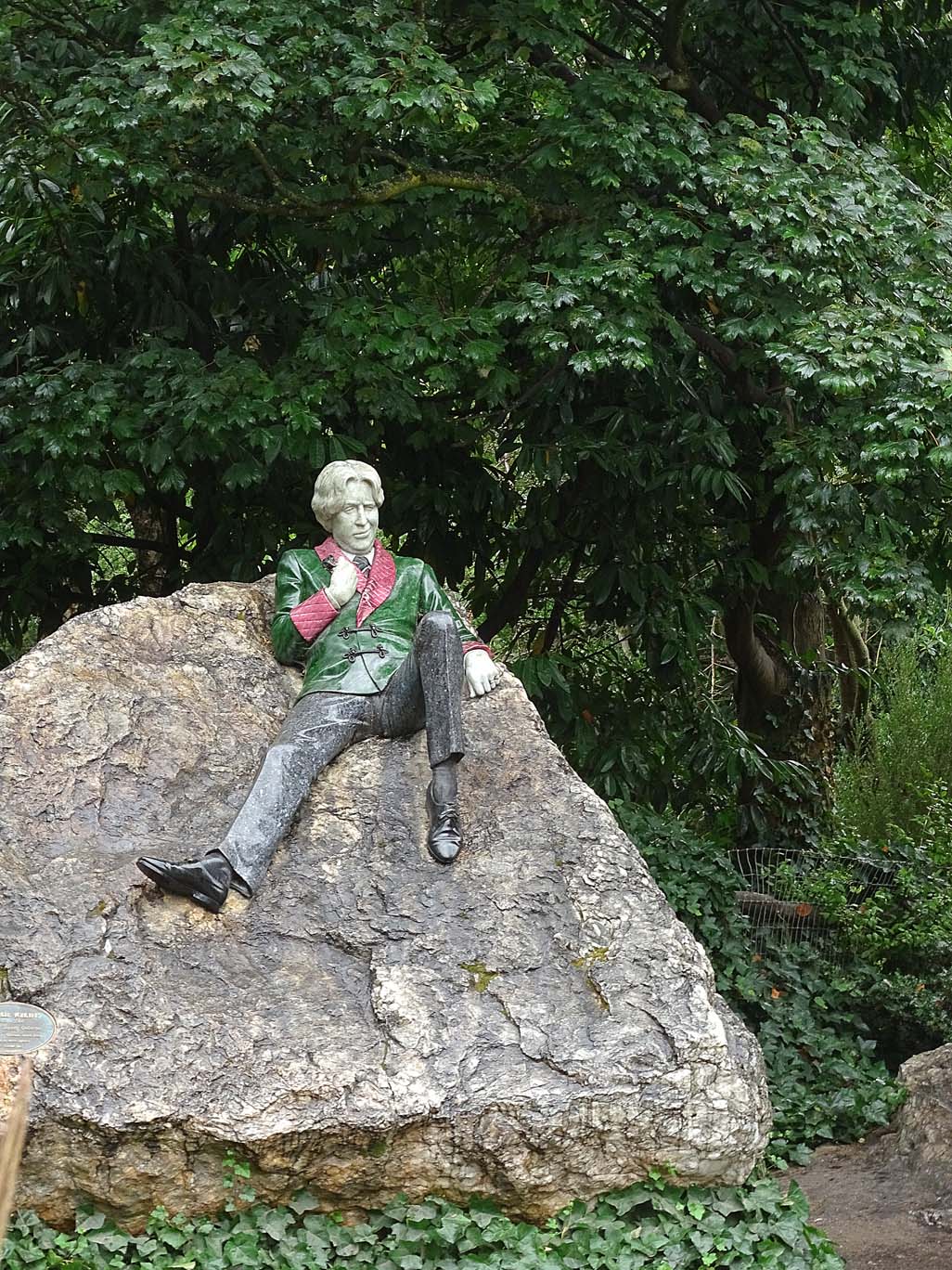
We began our bus tour of historic Dublin at the memorial for the 14 martyrs of the Revolution to ‘Free’ Ireland and their execution prison. There were statues of the famous writers and poets born of Irish descent on intersections and throughout the city… James Joyce, Samuel Beckett, Oscar Wilde, WB Yeats, and Jonathan Swift to name a few (although most of my pictures, except for Oscar Wilde’s statue, did not turn out – a hazard of taking pictures from a moving bus).


Driving through the streets of Dublin, we came to the Guinness factory and storehouse. Ah, my kind of beer! We did take a tour, which encompassed several multilevel floors. As we began the tour we saw the grain being toasted, the water as it cascaded into the vats plus learned the history of the Guinness family. The family still lives on site (but not in the storehouse), probably to insure the quality of their beer.


Moving along on the tour we saw Trinity College, the oldest pub, castles, Cathedrals, the most photographed door in Dublin (the Ambassador of Peru), all sorts of colorful doors, (a trademark of Dublin/Ireland) and Phoenix Park complete with a Tea Room. So much history from Vikings to Normans, to Irish and, oh yes, the English.




Our tour guide, Michael, and our driver, Paul are both from a border town (the border of the Republic of Ireland and Northern Ireland). They told us that there is no real trouble anymore between the two Irelands, and there is no longer a “wall” between the two, which makes crossing back and forth easier. Our tour guide said that the Republic of Ireland and Northern Ireland would like to be united – but N Ireland would probably prefer to stay under English rule as the medical benefits under the English would out-weigh loyalty. In England the health care is free but very expensive in the Republic of Ireland.
After we finished touring the inner city of Dublin, we headed to Wicklow Hills and toured the magnificent Powerscourt Estate and Gardens. We finally got our tea and coffee but they only served hot coffee so there were 2 unhappy tourists (Patti and Audra) who love their frappachinos, frothy and icy cold – settling for plain old hot coffee, yuk. But there was one very happy hot tea drinker… me!



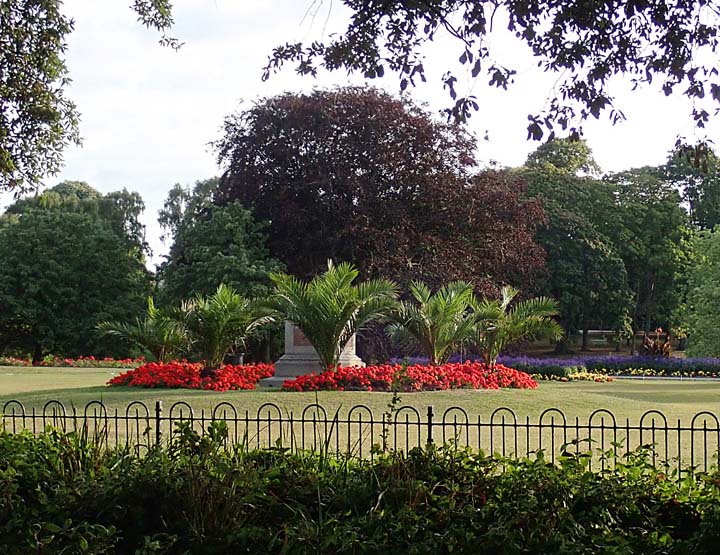
We then toured the gardens… The family spent a fortune on flora, fauna, and statues from all over the world, which was very evident as we wandered happily! First there was the walled garden alive with flowers bursting with color, ornate grilled gates, spectacular roses, hostas, all manner of flowering shrubs and trees from all over the world… including a redwood tree, a tulip tree and eucalyptus tree from ‘down under’. Moving along the path, there was a dolphin statue and fountain as we wandered in and amongst the huge trees and immaculate gardens.


On the way down to the Japanese Garden the slope was fairly steep so Audra had to back the wheelchair down the path, which was dirt, for Audra really wanted Patti to see this garden. Patti was able to see an overview as the path turned into a trail with steps winding in and out of the area too narrow for a wheelchair.
After Audra and I finished our tour, we were contemplating the uphill journey back to the main trail. Then along came Michael, the tour guide, who offered to help push Patti back up. Patti and Audra accepted his help, so Michael and Audra took turns pushing the wheelchair uphill. At one point the path was very steep – Audra was on one side of the wheelchair and Michael on the other, both pushing. They had to stop midway to rest and both Michael and Audra thought the other was holding the chair and it started to backtrack. They both grabbed the wheelchair and started laughing so we had to wait a few minutes for them to calm down before proceeding.
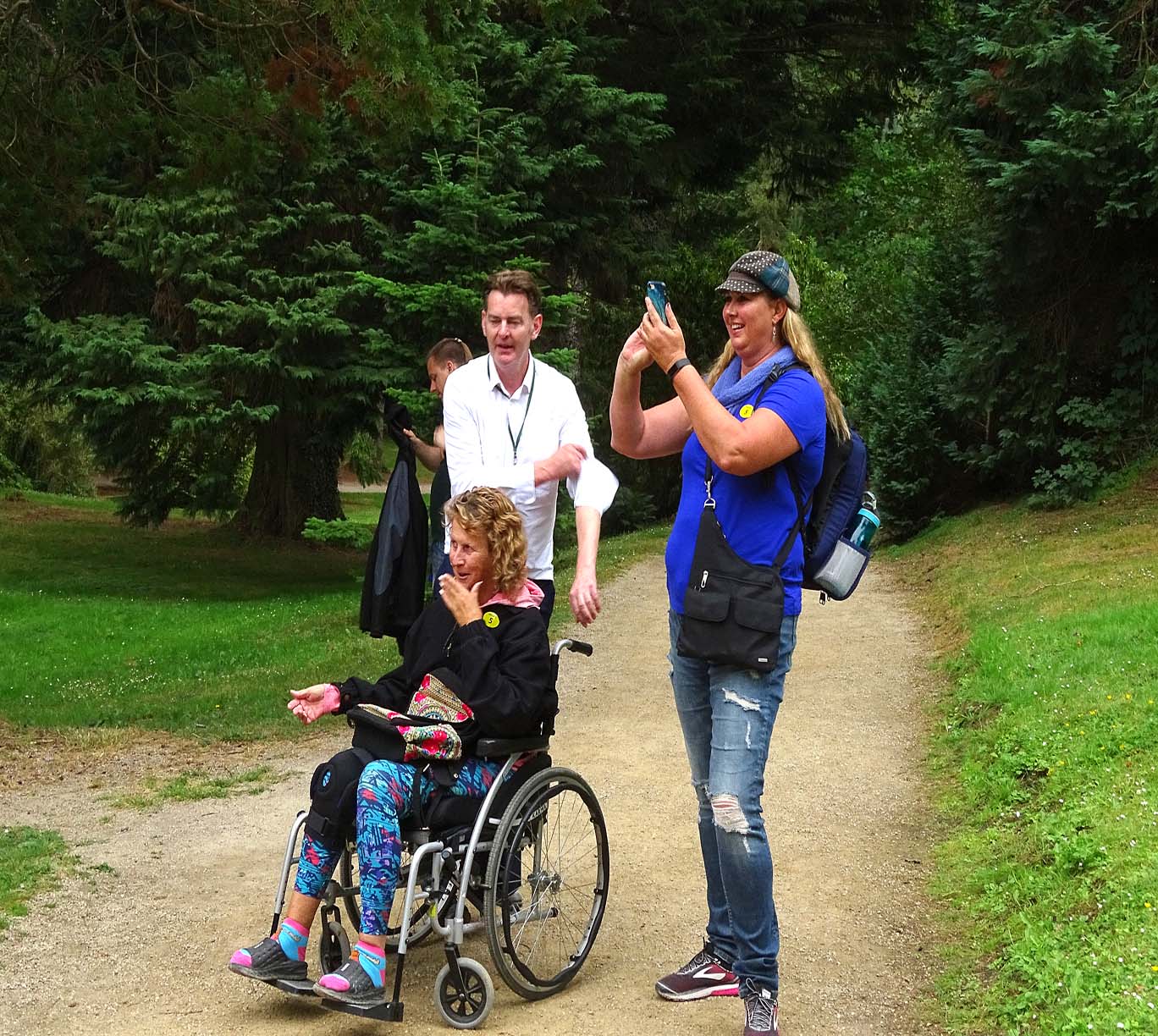
Michael was an excellent tour guide, even in the Powerscourt Garden, pointing out the plants and history for us, we had our own private tour guide for a while. He was very funny and made the whole group laugh.
Ireland is in a deep drought, much as the west of the United States is. It had been 40 days since they had seen any rain. A lot of the grass was brown, due to the lack of rain. The hay in this area is dirt-cheap right now because of an over-abundance on the market. Must be that hay prefers a drier climate.
After our tour of Powerscourt, we headed back to the ship for our “All-aboard” send off.
We greatly enjoyed our tour with Michael and Paul, which was probably our favorite part of the British Isle Cruise.
 gypsyroadgallery