July 13th, 2017

History
Tracy Arm is a fjord in Alaska near Juneau. It is named after the Secretary of the Navy Benjamin Franklin Tracy. It is located about 45 miles south of Juneau and 70 miles north of Petersburg, Alaska, off of Holkham Bay and adjacent to Stephens Passage within the Tongass National Forest. Tracy Arm is the heart of the “Tracy Arm-Fords Terror Wilderness”, as designated by the United States Congress in 1980. (In 1899, a naval crewman named Ford paddled into a narrow waterway connected to Endicott Arm and was trapped for six hours in a ripping tidal surge. Hence the name Fords Terror.)
Tracy Arm-Fords Terror Wilderness contains 653,179 acres and consists of two deep and narrow fjords: Tracy Arm and Endicott Arm. Both Fjords are over 30 miles long and one-fifth of their area is covered in ice. During the summer, the fjords have considerable floating ice ranging from hand-sized to pieces as large as a three-story building. During the most recent glaciated period, both fjords were filled with active glaciers.
Access: The most common access is by boat using Stephens Passage and entering Holkham Bay and Tracy and Endicott Arms. Floatplanes from Juneau and Petersburg are also used as a means of access.
Sawyer Glacier: The twin Sawyer Glaciers, North Sawyer and South Sawyer, are located at the end of the Tracy Arm. The wildlife in the area includes black and brown bears, deer, wolves, harbor seals, and a variety of birds, such as Arctic terns and pigeon guillemots. Mountain goats, which are usually found in the higher elevation areas, have been seen near the base of Sawyer Glacier.
Deepwater Emergence: The deep passageways and thin continental shelf lead to unique connections between offshore and inshore waters. The colder water temperature, nutrient rich upwelling, and strong currents allow for many species that live in deeper water to survive in the shallower waters.
The coral in this area, such as Primnoa pacifica, have contributed to the location being labeled as “Habitat Area of Particular Concern”. P. pacifica is typically a deep water coral normally found between 490 ft and 3,000 feet. However, in the Tracy Arm it is found between 20 feet and 100 feet offering a unique opportunity for research.
Forging into the Fjord

Leaving “the Land of the Midnight Sun” at 8pm, we sail through the night arriving at Tracy Arm Fjord around 6am. We traveled through Stephens Channel, carved out by the melting glacier and time. This is a dead-end channel – so the ship sails in, turns around and travels back out continuing south again. It makes a person on a huge ship in this immense and vast wilderness feel as small as a single speck of sand on a beach.

Usually when the ship heads into the Fjord, the ship stays in the vicinity of the Sawyer Glacier for a couple of hours… but for this trip, the captain went in, turned around, and we left right away. There was speculation the glacier had not been “sounded” recently and because 90% of the ice is under water – it was not safe to venture any closer than we did.

Passengers who had taken this cruise previously said they had reached out and touched the ice of the glacier. They also had seen calving (which is when some of the ice breaks off the glacier and falls into the bay).
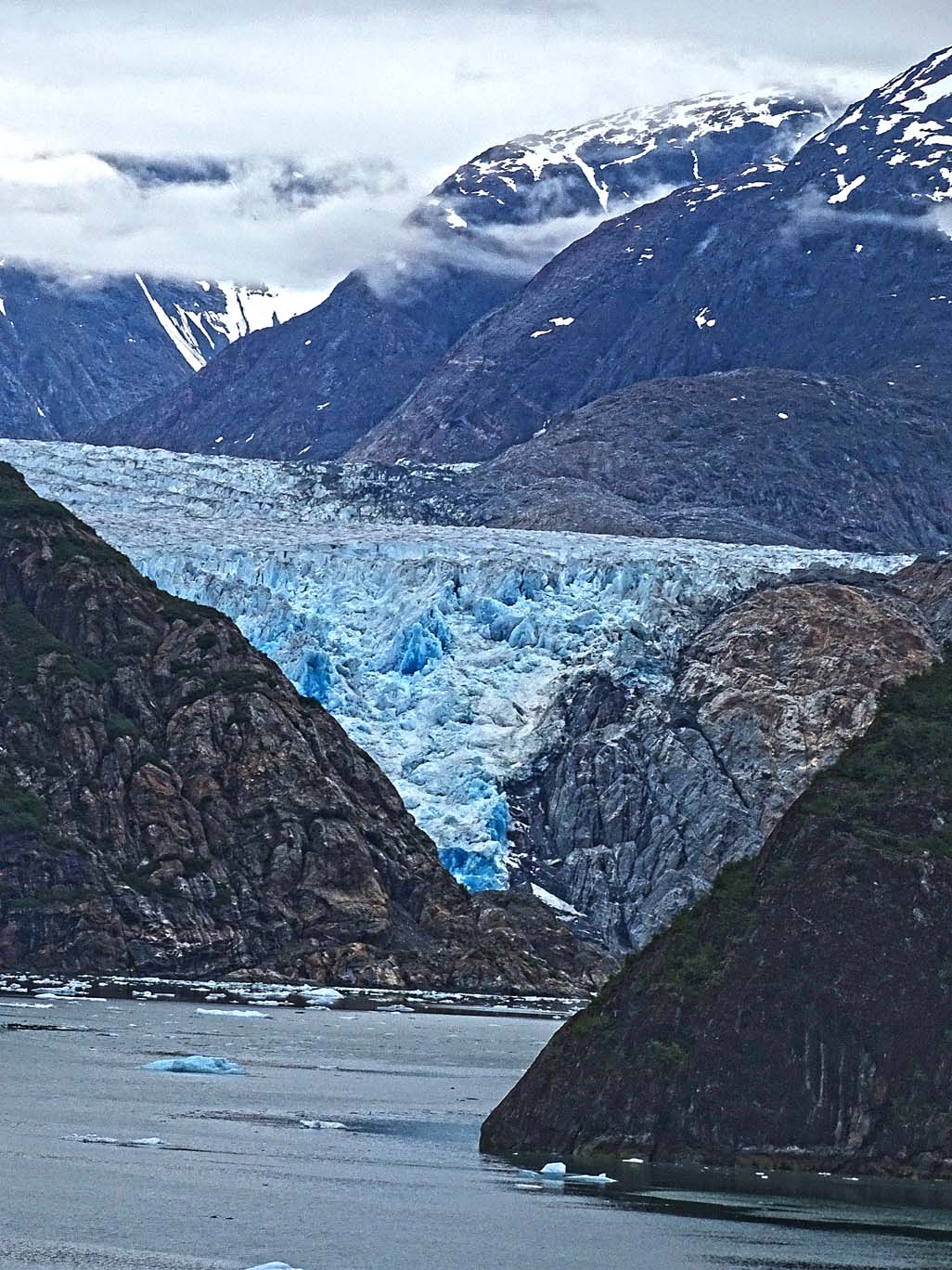
Part of the glacier field, the melting/traveling to the sea portion, appears blue due to the reflection of the sun through the water.
The weather was overcast and 50 degrees with a steady wind blowing. 50 degrees in Alaska seems to be much colder than 50 degrees in Colorado OR Arizona!!!

Many, many passengers were up on the top deck, in the cold and the wind, just for that one photograph that will make them famous… Or just impress someone back home. Because of the wind and temps that early in the morning, the crew were handing out blankets for those brave enough to forge the fjord. They were also handing out Irish Coffees or Baileys, (for a price), by the pool and next to the proprietors of blankets (warming you inside and out).


Tracy Arm Fjord is a National Preserve and as such, has a policy in place to protect the environment. The policy is that anyone entering this Preserve by cruise line or private tour: are not allowed to serve their passengers with any paper or plastic products (cups, plates, napkins, drinking straws or the like). Ugh… more dishes to do tonight.
On our way in we were on the lookout for bears and mountain goats roaming on the pristine shoreline, bald eagles flying overhead, or whales gliding in the frigid waters. We did not have the pleasure of seeing any of the above on our trip into Tracy Arm.
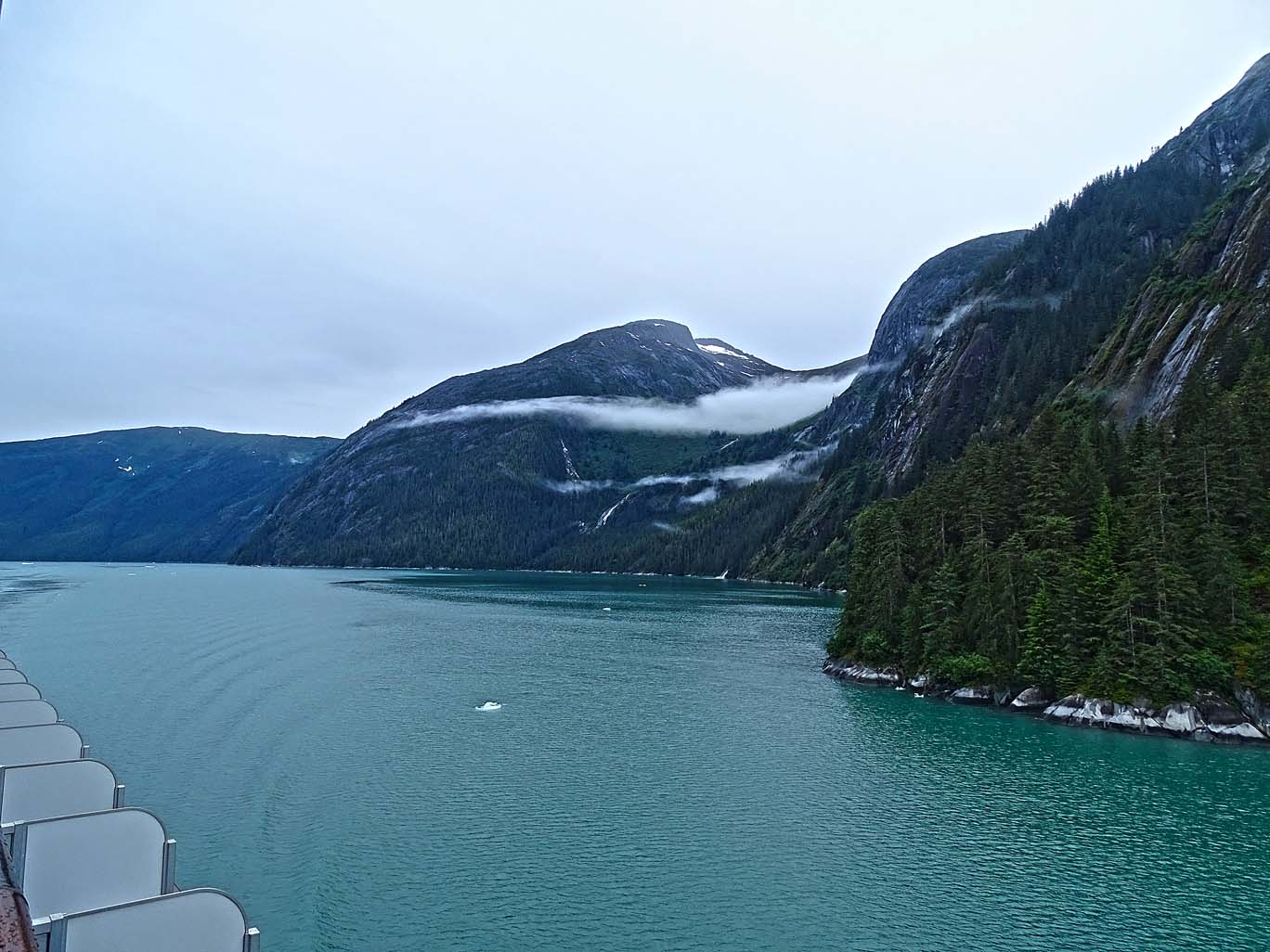
There was no ‘port’ to be seen just miles and miles of green, so many shades and tones of green in this preserve.* Every few minutes there was another waterfall traveling down the crevices’ that “Mother-Water” had traveled down last season and “Grandmother-Water” eons before that.


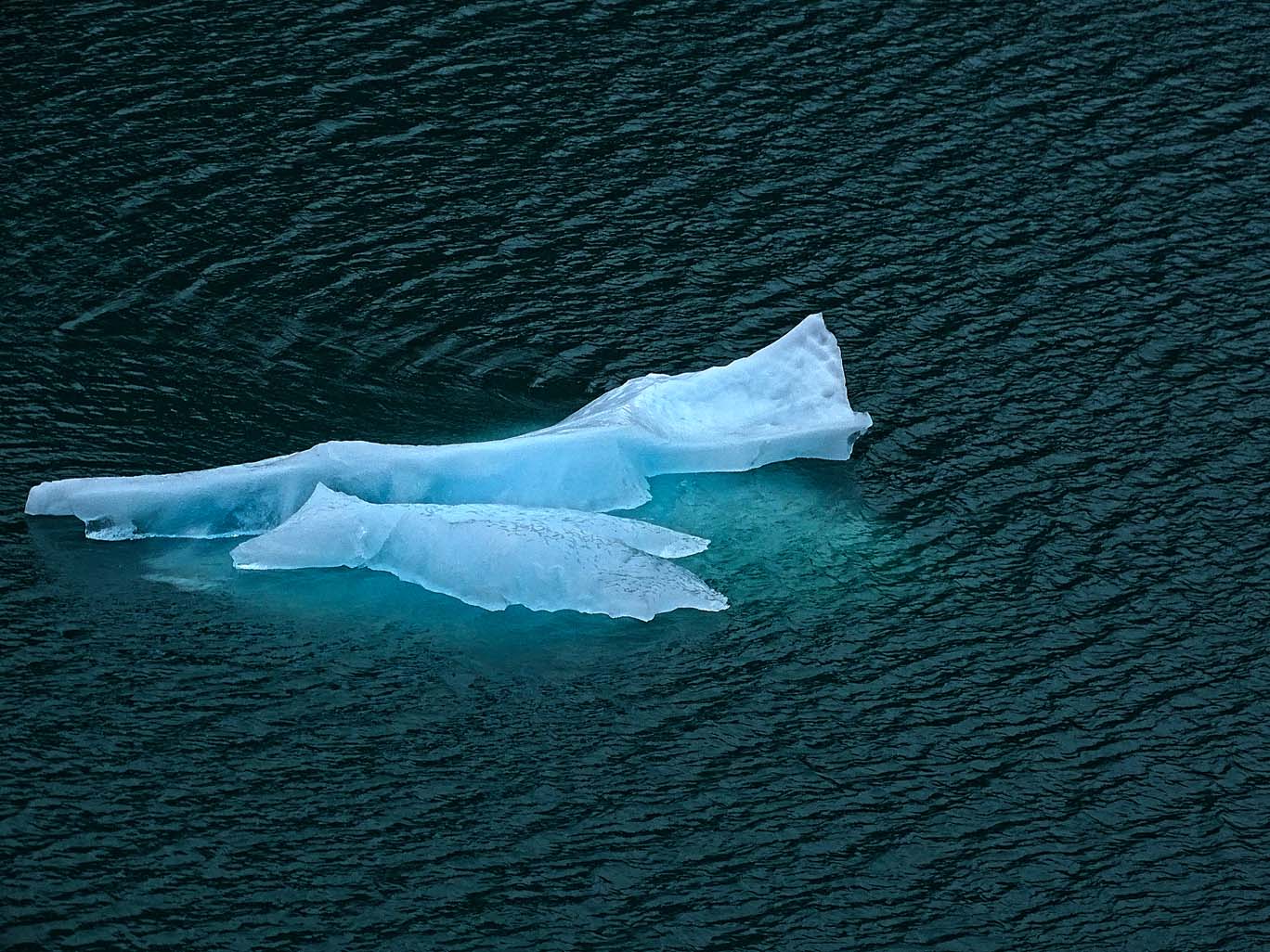
The captain went very slowly for I think it was a ‘no-wake’ zone because of the preserve, but not sure. As we traveled into the Fjord, which is a dead end fjord, small to large islands of blue ice traveled out to the sea, to warm and raise our ocean levels.


People with cameras and smart phones were on the top decks to witness this travel inward by first light, I know because I was one of them. I remember thinking how smart of all these people to bring blankets with them to traverse the windy Fjord, then realizing, they were all the same… I then hunted down my own blanket dealer. A little later in the morning, some tourists would view the Fjord and glacier from the pool or hot tub. I was not one of them!


I took soooo many pictures of waterfalls, trees, and ice islands floating out the channel, then when I reviewed them on the computer… they ALL looked pretty much alike. But I must say, sometimes there is a gem in the middle of the review.

The best view of the Tracy Arm Glacier was from further out… the closer we got to the field of ice in front of the glacier, the more limited the view (tunnel vision). It was a marvel to behold, how COLD it must have been for sooooo long to form all this glacial ice – not just this glacier, but also all the glaciers throughout the world.

When we arrived at the turnaround spot, the captain just turned the ship on a quarter, too big for a dime, and we sailed out as we had come in. Being in the channel and getting the rare chance to view nature in her primitive majesty, made us all feel minor and almost insignificant.
Who knows how long the glaciers will last…?
Once we were traveling back out of the Preserve, most people went below deck and had breakfast or went back to bed. We are now on our way to Victoria, BC. I do hope this is not the last time I see Alaska…
 gypsyroadgallery
Pretty amazing – great travelogue ⛴
LikeLike