July 10th, 2017

Ketchikan is believed to come from the Tlingit word “Kitschk-Hin” meaning “thundering wings of an eagle”. Ketchikan is the “Salmon Capital of the World.” We learned (at every port…) an easy way to remember the 5 different types of salmon by using your 5 fingers:
- Thumb – rhymes with chum = Chum Salmon
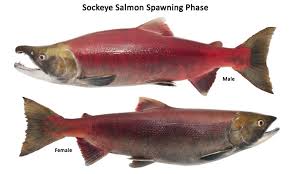
- Pointer finger – can “sock” you in the eye = Sockeye Salmon
- Middle finger – is the tallest finger = King Salmon
- Ring finger – slip a sliver ring on your finger = Silver Salmon
- Pinky finger = Pink Salmon
Often the ‘locals’ can order salmon just by raising one of the 4 fingers or thumb, but Sockeye Salmon remains the favorite, by far.
An estimated 19% of Ketchikan residents are of the Tlingit, Haida or Tsimshian Native Alaskan descent: (pronunciation is as follows: Tlingit = “Kling-it”: Haida = “hide-a”: Tsimshian = “sim-she-an”).
Ketchikan’s history dates back to 1883, when a man named Snow built a salmon saltery. By 1900 with a population of 800, the town was officially incorporated.
Region: Ketchikan is located on the western coast of Revillagigedo Island, near the southernmost boundary of Alaska. It is 679 miles north of Seattle and 235 miles south of Juneau. The 2.2 million acre Misty Fjord National Monument lies 22 air miles east of Ketchikan. It is the first ‘port of call’ for Northbound cruise ships and state ferries.
Population: 8142 within city limits with a total of 13,686 in the surrounding outlying areas. It is the 7th most populated city in Alaska.
Climate: Expect temperatures in the low 60’s (heaven) during peak summer months (our high was 56 degrees cloudy and overcast). Rainfall averages 152” per year, which occurs more heavily in autumn and winter.
Ketchikan is home to the largest collection of totem poles in the world. There are more than 80 varieties displayed throughout the city and stand as a reminder of the traditions and values of tribal culture and a powerful representation of Alaskan Native Art. Don’t feel bad if someone tells you you’re the “low-person on the totem pole”. Often the most important figure on the totem pole can be found at the base, not on top, as many believe.
Our day in port
We arrived in Ketchikan, AK at 7am, where we anchored a ways out in the bay, since there were 5 other cruise ships in port, so some ship had to anchor outside the dock – and that would be us today. So we had to take ‘tenders’ from the ship to the dock and there began our adventure.
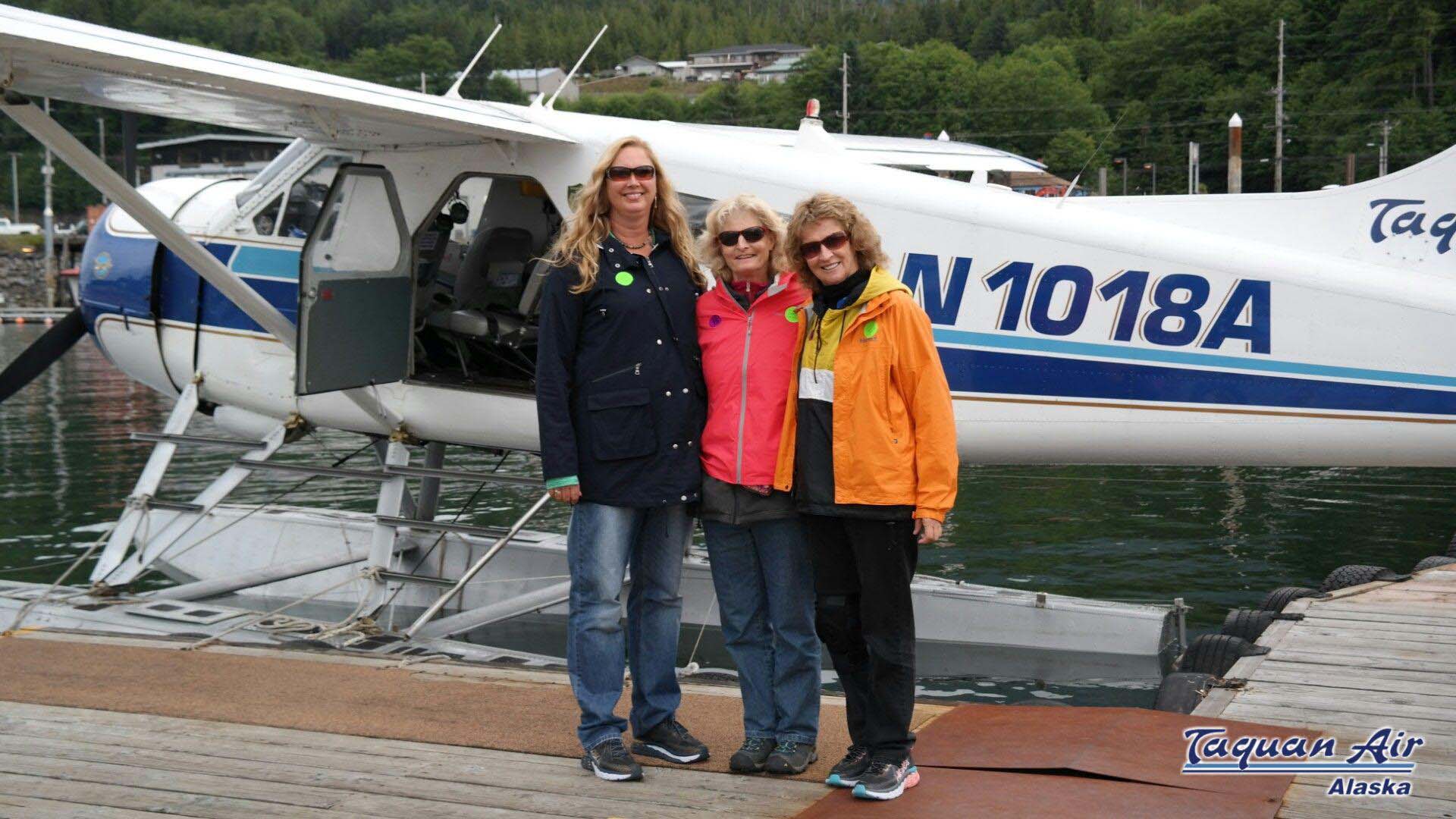
Our excursion for the day was a Seaplane adventure provided by Taquan Air over the exquisite Misty Fjords. Geologically, a fjord is a long, narrow inlet with steep sides or cliffs, created by glacial erosion.


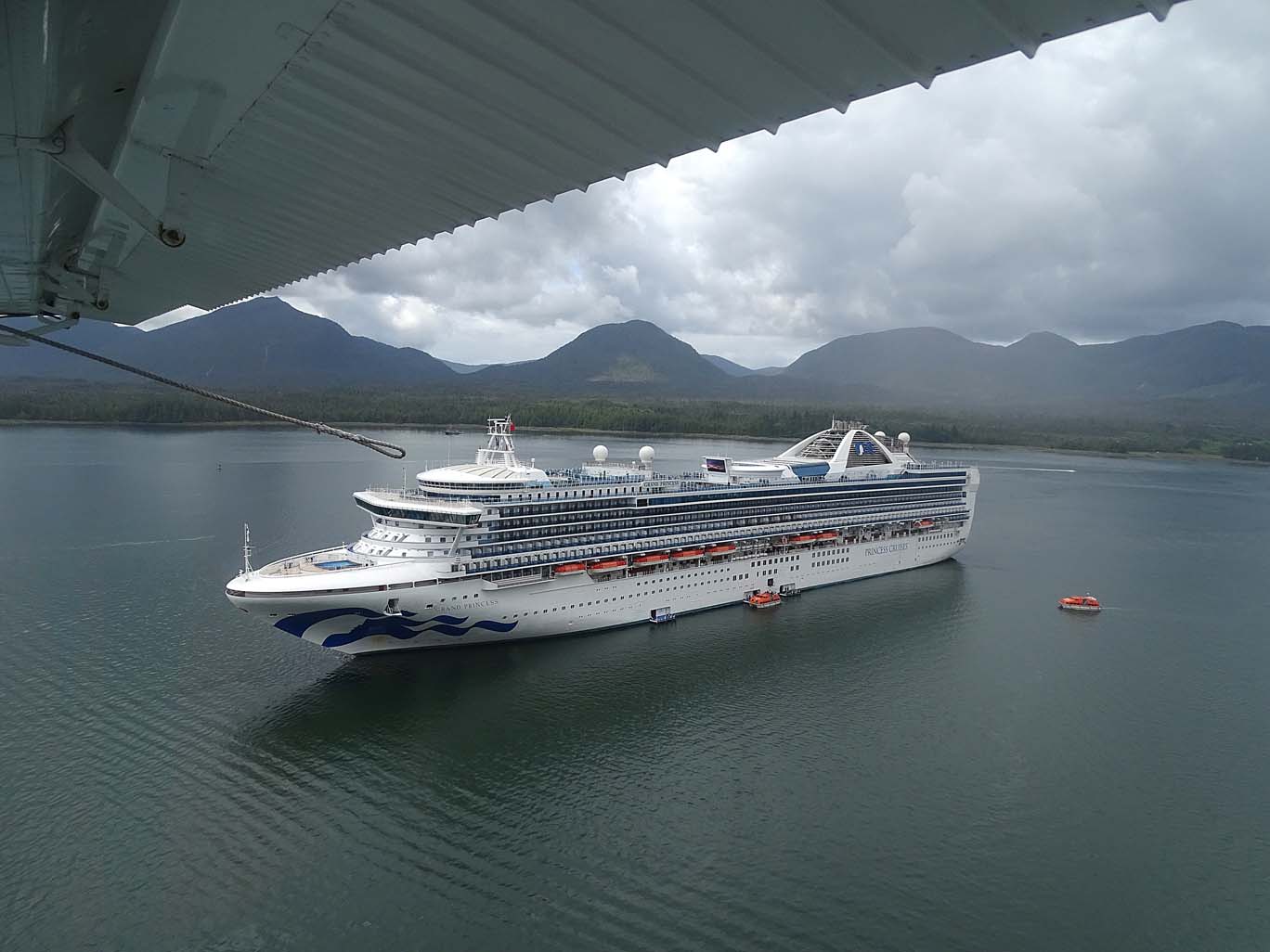
We took a 10-minute bus ride to where the seaplane was waiting. Our pilot, Ken, flew us into the air in a Beaver, twin engine float equipped bush plane to go flight-seeing from the historic waterfront town of Ketchikan. As he took off, he banked just enough for us to get a photo of our ship the Grand Princess.

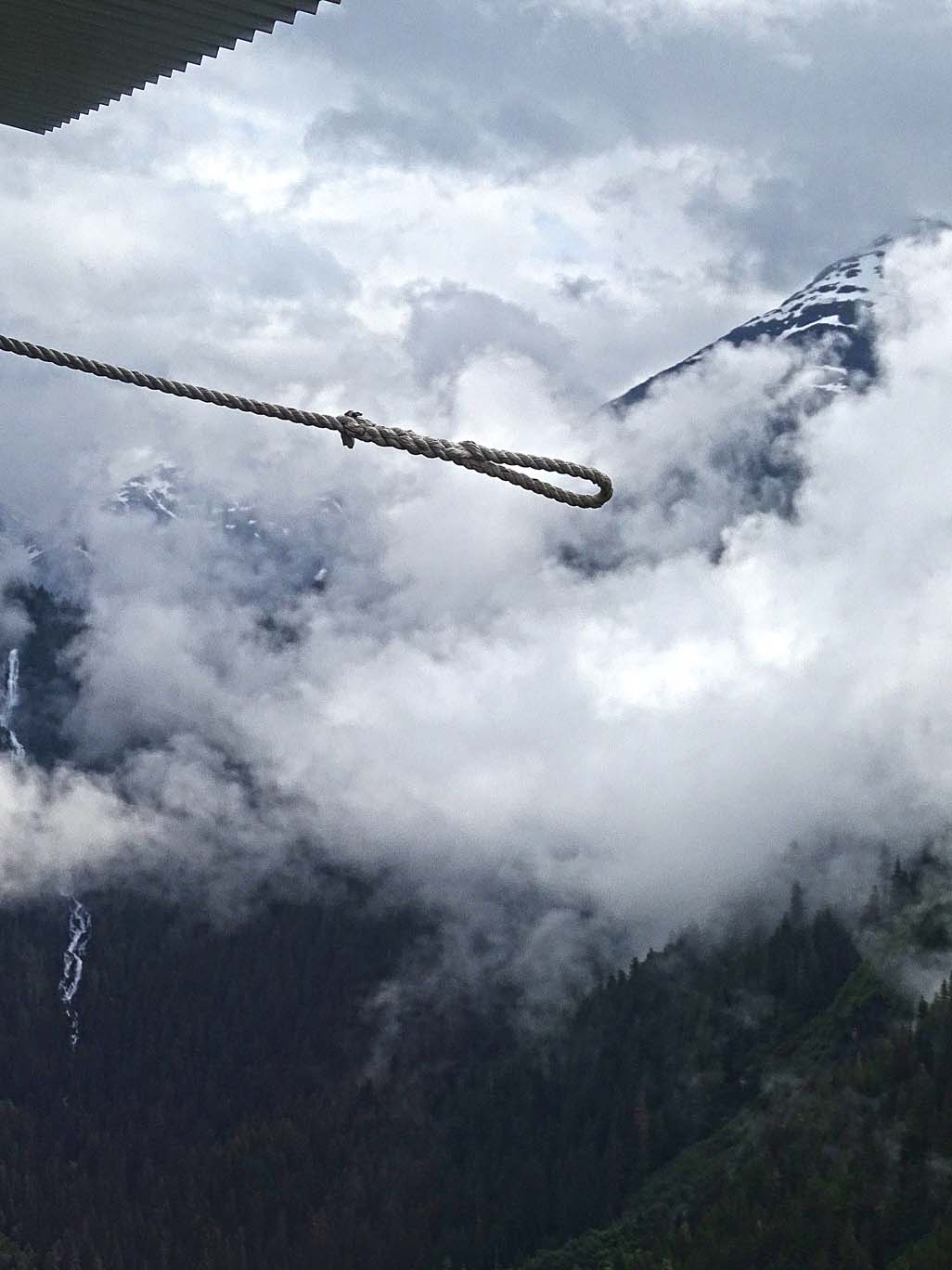
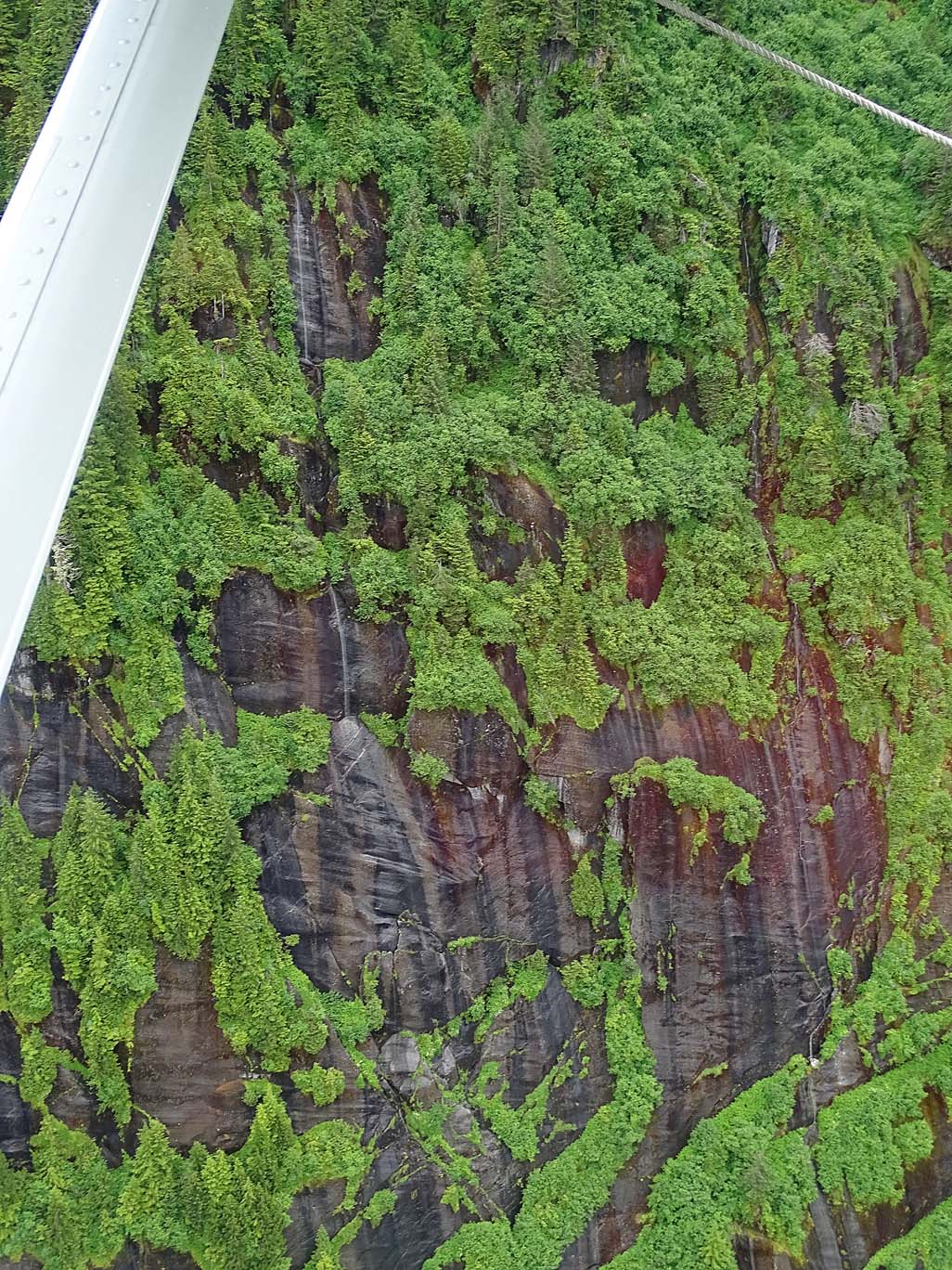
Ken flew 5 of us on an extended flying loop over Ward Cove, across the Behm Canal, overlooking Rudyerd Bay and Punchbowl Lake. The scenery was something to behold; with steep cliffs sheared off by glacial runoff, water and waterfalls abounded everywhere, islands creating majestic designs in the water – that could only be created by nature, and a stillness matched only by remote areas around the world.

At one point, Ken landed the plane on the water at Punchbowl Lake so we could exit the plane onto the ‘floats’ to experience the quietness (as Ken had cut the engines) of the Alaskan Wilderness. The silence was deafening – with no familiar sounds, i.e. traffic, horns honking, chainsaws, people chattering – just the inner silence of one’s soul could be heard. We saw only Bald Eagles soaring over the landscape and salmon jumping out of the water, for it was the beginning of their ‘running’ season. But we knew this wilderness was home to a lot more animals that seemed to be hiding this day, at least from the air… We were the only plane in the area and had this magnificent view and quiet all to ourselves. The water temperature is around 38 degrees all year around – we didn’t bring our bathing suits, so no one took a dip.


We saw a cabin from the air that the Forest Service rents for $25/night. Be sure to bring sleeping bags, food, matches, warm clothes/rain gear and a fishing pole, if you so desire. You need to be flown in for there is no other way to reach the cabin than by air. Our bush pilot, Ken, said he would be more than willing to fly you in and back out again, for a fee.
On our way back to Ketchikan, Ken flew us close to New Eddystone Rock, a 237-foot tall column of basalt (known as a volcanic plug) in the middle of Behm Canal. It was formed within the past 5 million years by volcanic activity, evidence for which is scattered sparsely throughout the Misty Fjord National Monument; including a lava flow high above Punchbowl Cove. New Eddystone Rock was part of a volcanic vent where magma rose repeatedly to the surface of the earth. The Eddystone Rock looks like a small island with trees growing right out of the basalt.

This was a pristine piece of Alaska to experience by air. Since the bush plane was very noisy, all the passengers had headphones that cancelled out some of the noise from the engines, and Ken could talk to us as he guided us on our flight, with information and stories about the area and AK in general. We asked Ken if he ever got tired of doing these seaplane trips and he emphatically said “NO” then added he had the best job in the world and he never gets tired of the view, wildlife or taking his ‘tour peeps’ into the ‘bush’!


We landed back at the historic waterfront energized and invigorated by our first glimpse of Alaska. The shear immense size of the land mass, the gorgeous volume of water just lying around, the sculptured GREEN landscape (that has SO FAR been untouched and protected from human greed) AND the beautiful people who care-take and share their beautiful land.

Thank You Alaska!

And Taquan Air
The last tender back to the ship was at 2:30pm and then we would set sail for our next port… Haines, Alaska.
Had we not taken the Seaplane Excursion we could have had the opportunity to do some other great excursions:
- Totem Bight State Park: and viewed the totem poles
- Saxman Native Village: where we could experience the rich living culture of the Tlingits as they unravel totem pole mysteries, see carvers in action, and watch Native dancers
- The Alaskan Rainforest Sanctuary: a 40-acre rainforest reserve home to bald eagles, black bears, seals and a variety of birds
- The Great Alaskan Lumberjack Show: World champion athletes compete in springboard-chopping, buck-sawing, axe-throwing, log-rolling and the thrilling 50-foot tree climb.
- George Inlet Lodge: a former cannery bunkhouse built in the 1940’s, this historic lodge was towed on a log raft over 70 miles to its current site on the shores of the spectacular George Inlet waterway 15 miles south of Ketchikan.
- Creek Street: This historic boardwalk was a Red Light District during the Gold Rush. Now, it is a quaint place to tour Dolly’s House Museum.
All photos by Taquan Air are used with permission.
 gypsyroadgallery