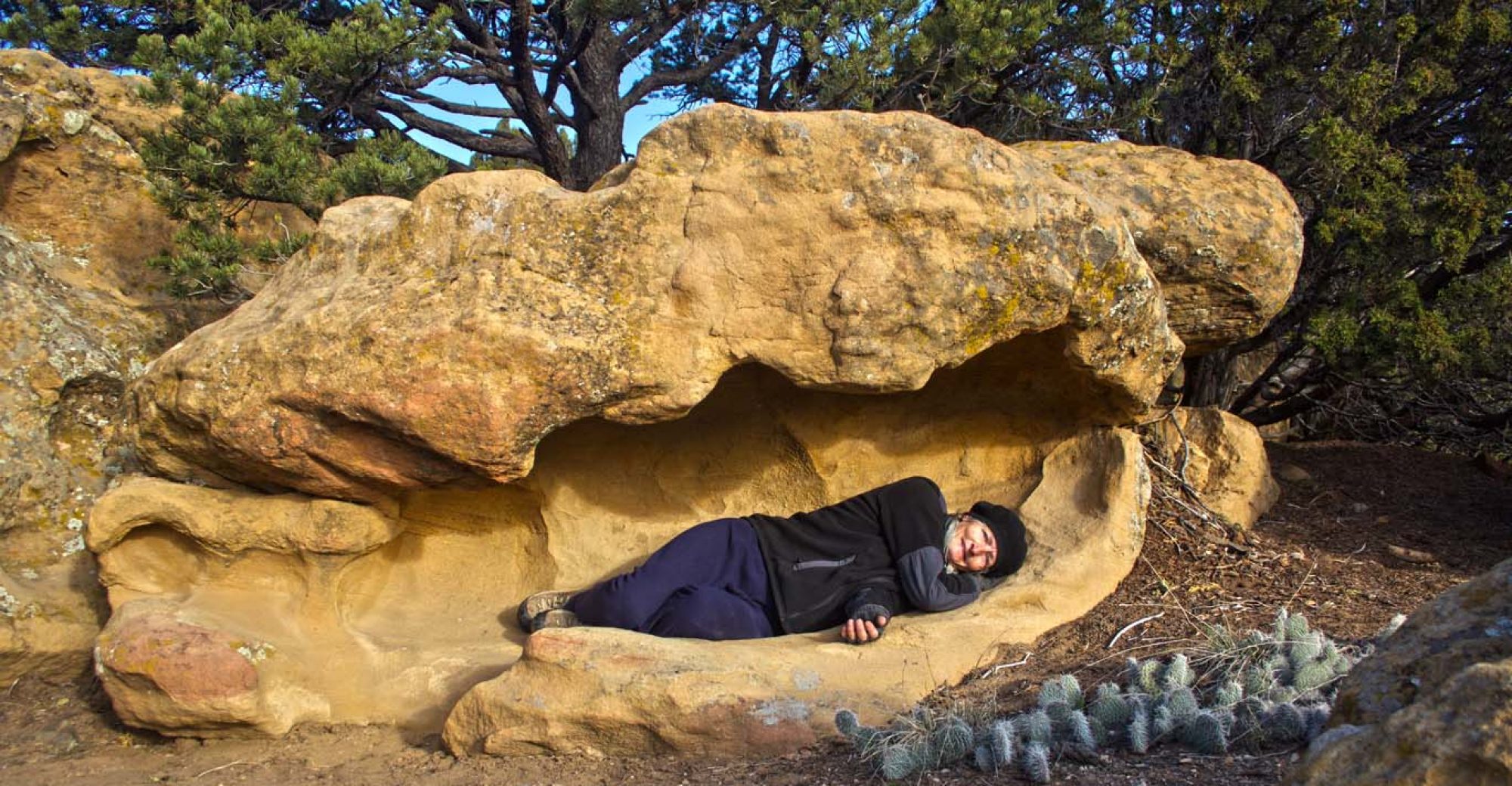
Thanks for your patience everyone… The weather has been quite uncooperative lately due to rain and extreme cold for Arizona, down to 22 degrees at night and daytime highs not much more than 35, might as well be in CO. The rain, thankfully no snow, has held us up because most of our day-trips are on unimproved dirt roads that are hardly maintained. So again, thanks for your patience.
On our day-trip today we ventured to San Carlos Lake and Coolidge Dam, 31 miles SE of Globe, AZ off US Hwy 70.
History
The Coolidge Dam (an Arch dam type) , on the San Carlos Lake, lies 31 miles SE of Globe, AZ on the Gila River. The Dam was built between 1924 – 1928 as part of the San Carlos Irrigation Project. The Design Engineer was Herman Neuffer.
Coolidge Dam impounds San Carlos Lake in the San Carlos Apache Indian Reservation. The project irrigates 100,000 acres (40,000 ha). Since the water is impounded so it can be released when the farmers need it, San Carlos Lake is often at a low level except in wet periods. When former President Coolidge dedicated the dam March 4, 1930, the dam had not yet begun to fill. Humorist Will Rodgers looked at the grass in the lake bed and said, “If it were my dam, I’d mow it.”
The dam was constructed by the Bureau of Indian Affairs. The overall structure used 200,000 cubic yards of concrete and consists of 3 domes, which are supported by massive buttresses on 100 foot centers. It rises 249 feet with a crest length of 580 feet. Two uncontrolled ogee crest spillways are concrete lined and located on each abutment.
Construction of the dam incurred opposition from the Apache Tribe, who feared it was a violation of their treaty rights. A compromise was finally reached, and the tribal burial ground and Geronimo’s old camp now lie deep under the water of the reservoir. As an alternative to disinter the bodies (which the Apache tribe considered desecration of the dead), a concrete slab was laid over the principle burial ground.
As part of the San Carlos Indian Irrigation Project, Coolidge Dam formerly generated Electricity from a hydroelectric plant. Flood damage in 1983 rendered the hydroelectric station inoperable and restoration plans were deemed unfeasible.
In 1988, the Bureau of Reclamation completed a study that concluded that the dam needed modifications to prevent a failure should a significant flood or an earthquake occur. Earlier floods that had resulted in water topping the dam had eroded the abutments, and the buttresses were judged to be unstable. Restoration started in 1991 and included an access road to the downstream side of the dam. The work concluded in 1995.
In January 1993, heavy rainfall (up to three times the normal amount) in Arizona filled San Carlos Lake and the operators were forced to release excess water. The ground was saturated, and the continuing rainfall ran off into the streams and rivers. To complicate matters, the snowpack was already 150% the normal amount. Dam operators for the Coolidge Dam released water in record levels because storage capacity had been reached.
The water flow was concentrated through the release gates, as opposed to letting the water overtop the dam, which would have created a different scour rate. The force of the Gila River undermined and ultimately caused the failure of the north and south abutments of the bridge crossing at Attaway Road. However, despite earlier concerns about the dam’s safety, it survived the flood even though retrofit work was in process at the time. (History: Wikipedia)
Day-Tripping
We turned off the highway onto a once paved road that now has several layers of dirt deposited by rain and wind. The road at two points was detoured around bridges that were in sore need of repair, (hence the detour) and we had to wind down into the wash to proceed. It wasn’t like a canyon we had to traverse, but still if it had rained it wouldn’t have been pretty! The drive was blasé and there was no sign of the ‘lake’ until we passed the 15 mile marker, which was about half way to the lake from where our adventure commenced. At this half way juncture, the scenery changed from flat-land to more of a canyon-like feel with cliffs and vegetation changing from sage-brush to tall cactus and rolling hills.


about as old as the dam…
Reaching the Lake, which was more like a reservoir, we were surprised to see that it was huge and this was wintertime! We could only imagine what it must look like in the rainy, wet season…

As I was exploring and snapping pictures, I looked back to the truck and spotted Patti standing at the overlook taking in the expansive view.

As we rounded the bend from the overlook, the colossal Coolidge Dam came into view. The Dam construction began in 1924 and was finished and commemorated March 4, 1930 by President Coolidge. The structure is massive and makes me think that at one time, a lot of water from the Gila River flowed through this area. The capacity of the dam is 1,200,000 acre feet (however much that is…). The dam was part of the San Carlos Indian Irrigation Project and was decommissioned in 1983. The Bureau of Indian Affairs now owns the dam.


The structure of this dam was different from any other dam we have seen so far. The dam had three huge dome-like cement structures on the lake-side part of the dam, which seem very unusual to us, all the more impressive for the 1930’s.


As we drove over the dam we were awed by the sheer size of the structure and the immense amount of water that could flow through here. We parked on the other side of the dam and I walked back to get a reverse-view of the dam. Sometimes by traveling back through the way I just came, there are spectacular views that I wouldn’t have seen had I just traveled on…


Walking back over the dam I wanted to take pictures of the out-flow of water to the back canyon; while leaning over the cement guardrail to take a picture of the water escaping, I was surprised to see a stairway heading down the sheer wall of the dam.


Looking straight down from the road over the dam. Talk about ‘stair-steps’…
Then scanning along the wall I noticed something protruding from the wall: when I zoomed in, I beheld a large intricately carved statue of an Eagle, WOW! Magnificent. If I hadn’t been hanging over the wall to take this picture, I wouldn’t have ever seen this incredible sculpture… how many tourists have missed this spectacular piece of art???


Along both ends of the dam were lights that once lit the way for cars (and wagon trains…) to traverse the dam. Now, through vandalism, the glass globes are gone and since the hydroelectric power no longer functions there are no longer lights for Gypsies to follow at night.


We stopped for lunch at a cement picnic table, probably built at the same time as the dam and enjoyed our lunch overlooking the dam and San Carlos Lake. The day that began as very overcast with spitting rain, cleared to a brisk, mostly sunny day. After several hours of taking in this spectacular dam, water, and nature we began our journey home, happy to once again be day-tripping.
Until next time…
Merry Christmas and Happy New Year to everyone!!!
 gypsyroadgallery
Wow…great pics….and history and adventure…!
Sent from my iPad
>
LikeLike